
Author: Sofie Illemann Jaeger
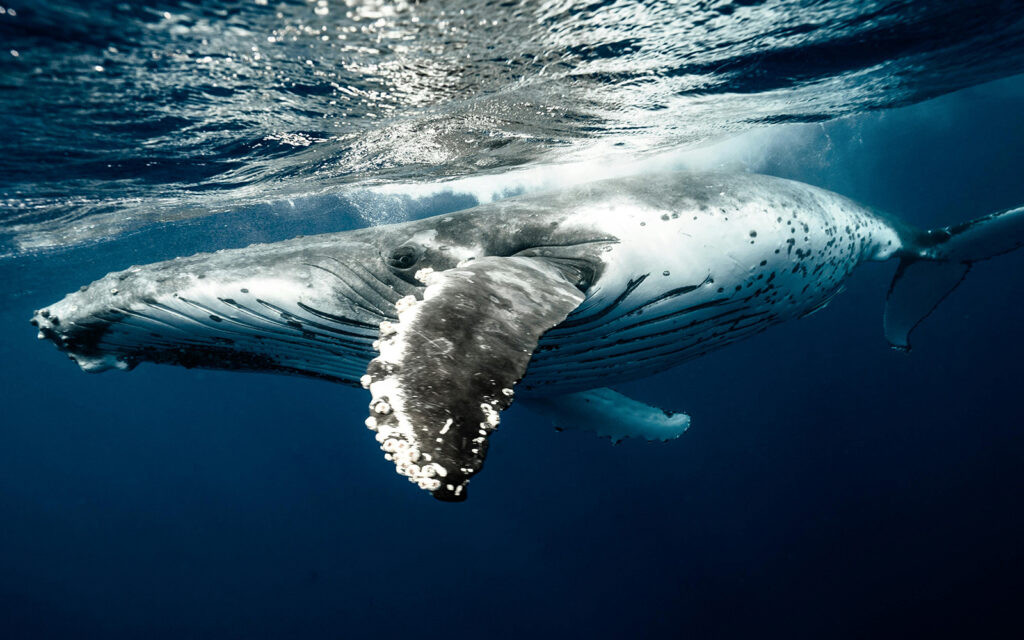
The story of the ‘Famous Tay Whale’ is well known among those who have visited Dundee. The skeleton of the humpback whale remains on display at The McManus Museum, near the more modern sculpture of the whale on the city’s waterfront. In this short reflection, we explore how a public debate, captured in the columns of the Dundee Evening Telegraph at the time, reveals interconnections between the whaling trade, community values, ethics, and identity. As part of the TRANSECTS project, we are examining how these themes resonate across British whaling communities in the 19th century.
The mind sickens at the contemplation of the suffering this intelligent and unhappy creature, if still alive, must now be enduring, the result of man’s cruelty, which has changed the pleasures of the happy and guileless existence designed for it by its Creator into the tortures of hell. If this is a sample of what whale fishing is, then I say it is not a thing of which Dundee has any reason to be proud; and I, for one, do not envy the feelings of those misguided men who, under the guise of sport or gain, could so abominably misuse and torture any of God’s happy and innocent creatures.
– Reader ‘A.H.’ (1884)
The story of the Tay whale has inspired local history and poetry (McGonagall, 1884), the incident becoming famous for the prolonged hunt of the whale in 1883. After first entering the Firth of Tay in November 1883, local sailors set out to harpoon the humpback, but the whale escaped repeatedly. After a lengthy hunt, the whale was eventually harpooned at the very end of December, but it escaped again. A week later, its carcass was discovered floating off the coast. The whale was brought to shore and sold for its oil, after which it was dissected, and its carcass was toured and displayed for public exhibition (Loukas et al., 2010).
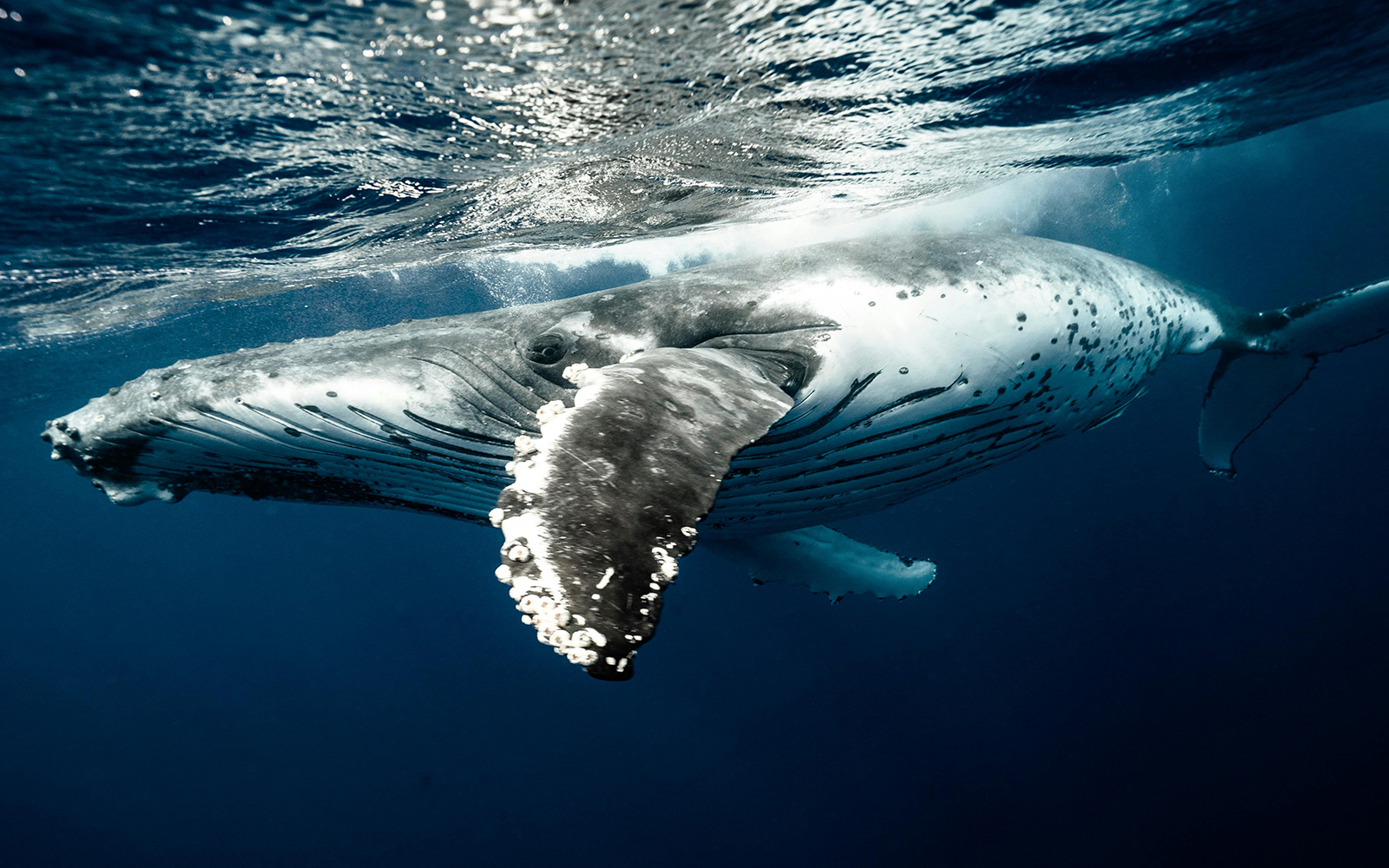
While the imagery of the whale remains a recurrent theme in Dundee today, less attention has been given to contemporary public responses to the hunt and what they reveal about attitudes toward wider whaling practices.
Newspaper coverage of the hunt was extensive, with at least 21 articles published over several weeks. Beyond reporting, the whale hunt sparked debate among citizens, which played out in the Evening Telegraph’s correspondence columns in the days following the whale’s death. Although these reader debates offer only glimpses of public sentiment, they provide valuable clues about the themes central to Dundee and Scottish whaling in the period.
The first theme is ethical, focusing on the exploitation of nature for human benefit and the suffering endured by whales in pursuit of sport and trade. The second theme concerns community identity, particularly how the skills and courage of whalers were seen to embody local values. Notably, the contributors to the Telegraph emphasised the need for greater public awareness of both the ethical dimensions of whaling and the demands that it placed upon whalers.
Having witnessed the public spectacle and media reporting surrounding the hunt, several readers published responses calling for greater empathy toward the “innocence and majesty of nature” embodied by the whale, but representative of animals more broadly:
Is there no one to put in a word for the poor whale? I don’t think I can be called squeamish, yet your account of the whale hunt in the Tay has given me ‘a bit of a turn.’ I look upon the treatment that the whale has received as an outrage against nature and humanity (…) What harm was the beast doing? (…) It is too horrible. Why talk of our growing humanity? Let us get quit of hypocrisy, and return to our bear-baiting and cock-fighting. In this case, of course, the necessities of trade cannot be pleaded in extenuation; either greed or cruel instinct is to blame; and I am much mistaken if it be not widely felt to have been a wanton outrage on the innocence and majesty of nature.
– Reader ‘Mr A Stevenson’ (1884)
In contrast, other readers defended the hunt, arguing that it helped to safeguard the equally important “salmon, white fish, herrings, etc., which form the principal daily food of the unwieldy monster” (Crombie, 1884). A sharper response came from another Dundee resident, who rejected the idea that the community should feel shame about the hunt and whaling practices:
I observe a letter in your issue of this evening signed ‘A. H.,’ indulging in a copious deliverance of abuse of those engaged in the late whale hunt. (…) I say that Dundee has ‘reason to be proud’ of her whale fishers and their deeds of daring, and that this recent specimen of what Dundee can do is one of which, not only in Dundee but throughout Scotland, all men worthy of the title manhood will be proud. So long as our men are like those who fought so bravely through the hours of darkness with a huge animal, which for once in a time has escaped, Scotchmen need never be ashamed of their country nor fear for its honour or safety in an hour of danger.
– Reader ‘T.K.’ (1884)
This writer’s use of the whale hunt as an illustration of “what Dundee can [achieve]” in the face of adversity highlights the significance of whaling for the city’s sense of identity. The writer underscores how values associated with whaling—such as courage, endurance, and the skills required to pursue powerful animals under challenging conditions—became woven into the identity of this coastal community through its participation in the industry.
In Dundee during the period of the Tay whale incident, the substantial public interest in the incident, as evidenced in the Telegraph columns and beyond, is perhaps unsurprising given that Dundee was then the UK’s busiest whaling port (Sanger, 1996). However, the tensions that played out in the debate and the specific arguments advanced by the writers speak to a Dundee public that was not only interested in whaling due to its economic potential for the area. The readers’ contributions indicate that members of the community also had considerable interest in how their close association with whaling reflected on the community’s cultural values and collective identity.
In the Telegraph columns, this concern with identity caused the debate to become personal and impassioned quickly. Some contributors condemned the hunters of the Tay whale as being cruel and hypocritical, while others defended them as a source of pride. One debater, ‘Stevenson’, stated that the hunt was “an outrage against nature and humanity”. Notably, they chose to include “humanity” in this statement (Stevenson, 1884). In selecting this wording, Stevenson established an indirect link between the whale and the community. Their wording suggests that the whale and its suffering were not wholly external to human values, ethics, and considerations.
In contrast, T.K. positions the whale as an adversary. They also reassert an assumed boundary between the whale (and species more widely) and humans, suggesting that the animal is less deserving of sympathy than their fellow residents:
There are people who will ‘sicken’ over a crushed worm while doing nothing for their poor suffering fellow-creatures at their very doors. If ‘A.H.’ wants to ‘gush’, he will find plenty of scope all around him suffering humanity(…). We have enough and to spare of easy sentiment; it is as cheap as dirt, and reflects little credit on its possessor. (…) [T]hat spurious sentimentality, of which men like ‘A. H.’ seem to keep a large stock always on hand, highly impregnated with self-conceit, I have no other feeling than contempt. (…) What we want is real manliness. Three cheers for the brave whalers, say I.
– Reader ‘T.K.’ (1884)
Where the debaters’ views on the priority of animal suffering produced from whale hunting—whether in the case of the Tay Whale or wider whaling practices—differ, they nonetheless express similar sentiments concerning the bravery and well-being of whalers themselves.
‘A.H.’, the writer with whom the debater ‘T.K.’ engages in a back-and-forth through the columns, emphasises concern for the condition of both whalers and whales in the trade. A.H. is not necessarily opposed to all whale hunting. However, they state that public sentiment recognises that “there is little excuse for such barbarity” in the current means and methods of killing whales. Whales, they contend, could and should be killed “speedily and painlessly”. Otherwise, as in the case of the Tay Whale, the practice becomes “an abuse” (A.H., 1884).
Moreover, A.H. remarks on the risks and challenges facing whalers in the industry:
I would not, however, be misunderstood. I never said our whales were not brave or manly. Their bravery and daring are matters of history. I honour them for their bravery and hardihood; their endurance of the perils of the freezing north, the long darkness, the isolation from friends and home comforts, their devotion to duty amid the bitter inclemencies of nature’s most savage scenes. But though well acquainted with whalers (…), the particulars of whale-capture are but little known to the citizens of Dundee. (….) I repeat that if the whale-hunt of Monday is a fair sample of what whale-hunting is and must necessarily be, it is not a thing to be proud of, but a matter for regret.
– Reader ‘A.H.’ (1884)
Collectively, the debaters’ entries in the Telegraph columns highlight two core themes for the TRANSECTS project’s research on the history of whaling. First, there is a shared concern among A.H., T.K., and other contributors about how Dundee’s involvement in whaling reflects the community’s values, skills, and identity.
Both A.H. and T.K. link the whalers’ ability to kill whales with notions of “manliness”, “bravery”, and community capability. Yet, A.H. and other column contributors argue that pride in these values can only be justified if whaling is carried out not merely with “good intentions”, but also with “humanity” (A.H., 1884; Anonymous, 1884; Stevenson, 1884; T.K., 1884).
A second, more implicit theme raised by the debate around the Tay Whale is the community’s limited familiarity with the detailed aspects of whaling that ordinarily took place out of sight in the Arctic’s distant waters. As A.H. notes, the general public often knew little of “the details of the [whaling] business” beyond “[hearing] annually of the numbers of whales caught” (1884). The Tay Whale hunt sparked heated debates among residents, in part because it was unusually visible to communities. The invisibility that ordinarily surrounded much of the industry’s processes hindered public awareness of what whaling methods meant for both whale and whaler.
When we consider the range of arguments mobilised by the Telegraph contributors and the links they draw between community values, benefits, ethics, and the whaling trade, several recurring themes emerge. Our in-progress archival research in other UK communities reveals similar patterns, underscoring the complex ties between coastal communities and the whaling industry. The ties combined economic and energy dependence on whale oil with other profound impacts of the industry, such as risks to whalers’ safety, changes in community identity, and anxieties about the exploitation of nature.
For TRANSECTS, the debate around the Tay whale highlights themes that are appearing throughout archival sources from each of our three field sites in East Coast Scotland, Orkney, and the Humber area. As we continue to trace these themes—including the well-being of whalers and whaling communities, and the relationship between cultural identity and whaling—we do so with a view to examining their connections to two later dominant energy periods in British society: oil and gas, and renewables.
References
A.H. (1884) ‘Correspondence: The Whale’, The Evening Telegraph, Jan 3, 1884.
Anonymous (1884) ‘Correspondence’, The Evening Telegraph, Jan 4, 1884.
Crombie, J. L. (1884) ‘Correspondence: The Whale’, The Evening Telegraph, Jan 4, 1884.
Loukas, M., Pennell, C., Tubbs, R. S. and Cohen-Gadol, A. A. (2010) ‘Sir John Struthers (1823–1899) and His Ligament and Arcade’, Neurosurgery, 66(6).
McGonagall, W. T. (1884) ‘The Famous Tay Whale’. Dundee. Available at: https://www.poetryfoundation.org/poets/william-topaz-mcgonagall (Accessed: 12.11.2025).
Sanger, D. (1996) ‘Testing the models: Hunter-gatherer use of space in the Gulf of Maine, USA’, WORLD ARCHAEOLOGY, 27(3), pp. 512-526.
Stevenson, A. (1884) ‘A Wail for the Whale’, The Evening Telegraph, Jan 3, 1884.
T.K. (1884) ‘Correspondence: Cheap Sentiment’, The Evening Telegraph, Jan 4, 1884.