Author: Dr Karen Alexander
TRANSECTS explores marine energy transitions: the long journey from whaling to oil and gas, and now towards renewable energy. We study how changing energy systems reshape coastal communities, alter relationships with the sea, and leave traces in the marine environment as well as in cultures, institutions and collective memory.
When we developed the proposal, the intellectual rationale for bringing together historians, archaeologists, lawyers, sociologists, political scientists, ecologists, spatial scientists and arts researchers felt obvious. No single discipline can explain something as complex as an energy transition. These are not simply technical changes. They are social, cultural, political and environmental transformations that unfold over decades, sometimes centuries. What I did not appreciate at the outset was how much leading the project would become its own lesson in the nature of transition.
People often compare leading a large research project to herding cats. I understand the comparison, but I think it misses the point. The challenge is not that people refuse to move. The challenge is that everyone is moving, often with great energy and commitment, but not always in the same direction.
That is especially true in interdisciplinary research. Every discipline brings its own questions, priorities and ways of understanding the world. The historian sees one set of connections; the ecologist another. The lawyer is drawn to governance and regulation; the political scientist to power and institutions. The archaeologist uncovers stories embedded in places and material remains; the arts researcher asks how those stories are communicated and experienced.
These differences are the reason interdisciplinary projects are valuable. They are also the reason they are difficult. Left alone, every discipline naturally gravitates towards its own concerns. The work of leadership is not about eliminating those differences. It is about creating enough shared purpose that people remain connected despite them.
Over time, I have become convinced that the biggest challenge in a project like this is not intellectual but organisational. The project succeeds or fails through communication. Governance, reporting structures and meetings are often treated as necessary bureaucracy, but they are actually the mechanism through which a diverse group of researchers keeps sight of a common goal. Without constant effort, fragmentation becomes the default state.
This is particularly true when everyone involved is busy. Like many large grants, our project depends on a team of Co-Investigators whose expertise was essential to securing funding but whose available time is inevitably limited by teaching, leadership roles and other research commitments. As a result, a huge amount of responsibility falls on our postdoctoral researchers and research assistants, who have become the project’s engine room. They maintain momentum, connect conversations, solve problems and keep the whole enterprise moving forward.
Perhaps the greatest surprise has been how difficult genuine knowledge-sharing can be. We all speak enthusiastically about collaboration, yet collaboration requires a level of openness that academic culture does not always encourage. Findings remain within work packages. Emerging insights are not always shared. People protect intellectual territory, often without consciously meaning to. Everyone is working hard, but that effort does not automatically add up to collective understanding. As the project has progressed, I have found myself returning repeatedly to the same challenge: how do we ensure that individual strands of excellent work contribute to something larger than themselves?
The more I think about it, the more this seems connected to the transitions we study. Looking back, historical energy transitions often appear coherent and inevitable. We tell tidy stories about the decline of one industry and the emergence of another. But living through a transition is rarely tidy. It involves competing interests, conflicting priorities, uneven participation, periods of uncertainty and no guarantee that everyone shares the same vision of the future. In that sense, the project sometimes mirrors its subject matter.
Perhaps that is why I am trying to become more patient with the messiness of interdisciplinary research. The project is not failing when it reveals disagreement, competing priorities or differing perspectives. In some ways, those tensions are the evidence that genuinely different forms of expertise have been brought together.
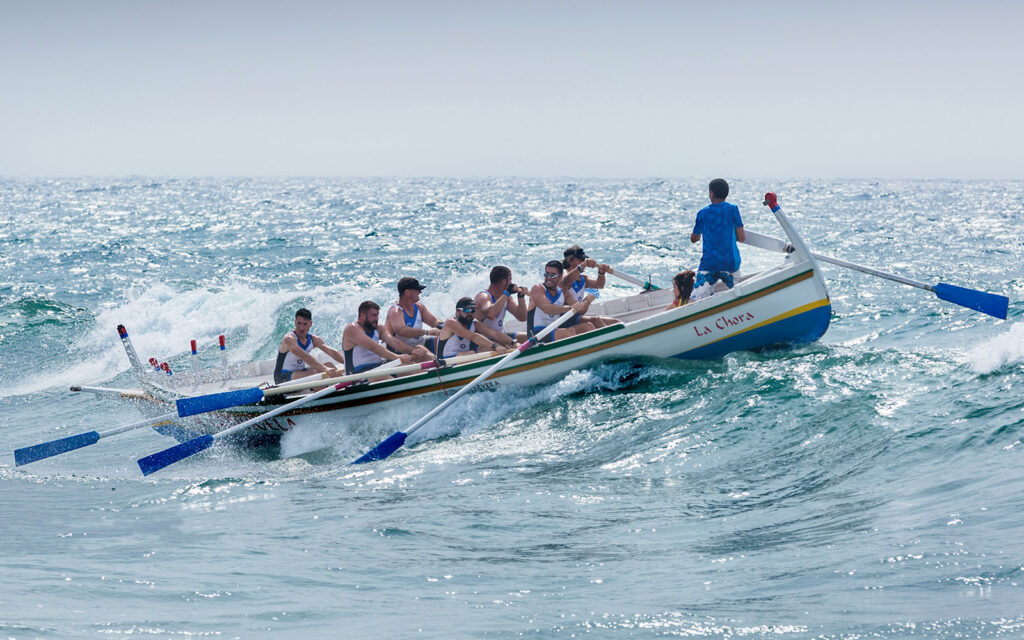
The challenge is not to make everyone think alike. It is to keep enough people focused on a shared horizon for long enough to make progress towards it. That, I have learned, is much closer to the reality of leadership than herding cats. It is less about directing movement and more about maintaining a sense of collective purpose. Like the coastal communities we study, we are navigating a transition. The destination matters, but so does the ability to keep travelling together.